Description
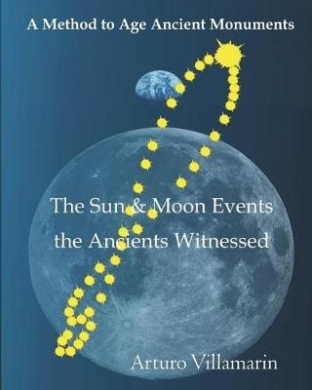
A graphic method was developed to find the age of ancient monuments using the sun’s declination in antiquity. Thousands of years in the past, the earth’s axis due to the variation in its obliquity (nutation) and its precession, pointed to the celestial sphere in a different direction than it does today. These two factors made the sun rays impinge upon a site on earth at an angle different than it does today at any time during the year. Since the early days in history it has been claimed, some archaeological monuments were designed in antiquity to align with the sun at certain times during the year. Those claims were and are mostly based on observations under contemporary astronomical conditions, not under the then prevailing conditions in the year they were designed in. Today those monuments have become misaligned since the earth axis’ parameters have continued changing thru the ages; which makes those contemporary observations just approximations. Going back in time to find the original direction the earth’s axis pointed to and its obliquity when the monuments were designed to align with the sun, allows us to find their ages. Graphically, plotting the calculated sun’s positions, on a GIS map, during the solstice over millennia generates a curve of the sun’s positions relative to earth, an analog to an analemma, which we named a Super-Analemma. Extending a line in the GIS map at the azimuth of a monument’s axis of symmetry to its intersection point with the Super-Analemma yields the year of the monument’s original alignment with the sun; hence its age. Important results were obtained with the application of the method in conjunction with the moon’s positions in the resulting years. Eclipses, simultaneous alignments of both, the sun and moon with earth yielded unexpected alignments at all the test sites. These and other alignments validated some of the traditional claims at major sites, but with greater precision. This method showed all the monument ages are significantly older than those calculated via other methods. The following sites are included in the study: Teotihuac n in M xico, El Infiernito in Col mbia, Mohenjo Daro in Pakistan, Machu Picchu in Peru, Giza in Egypt, Kalasasaya in Bolivia, Stonehenge in the UK and Tifariti in W. Sahara.